Reference Objectives
Map each restaurant element to its Kubernetes concept
Trace the end-to-end flow from application packaging to running pods
Keep core terms visible without relying on prior assumptions
The restaurant is the visual model for the Kubernetes platform. The kitchen standardises the application package, the menu defines the work that can run, the front desk coordinates desired state, and the dining tables run the work.
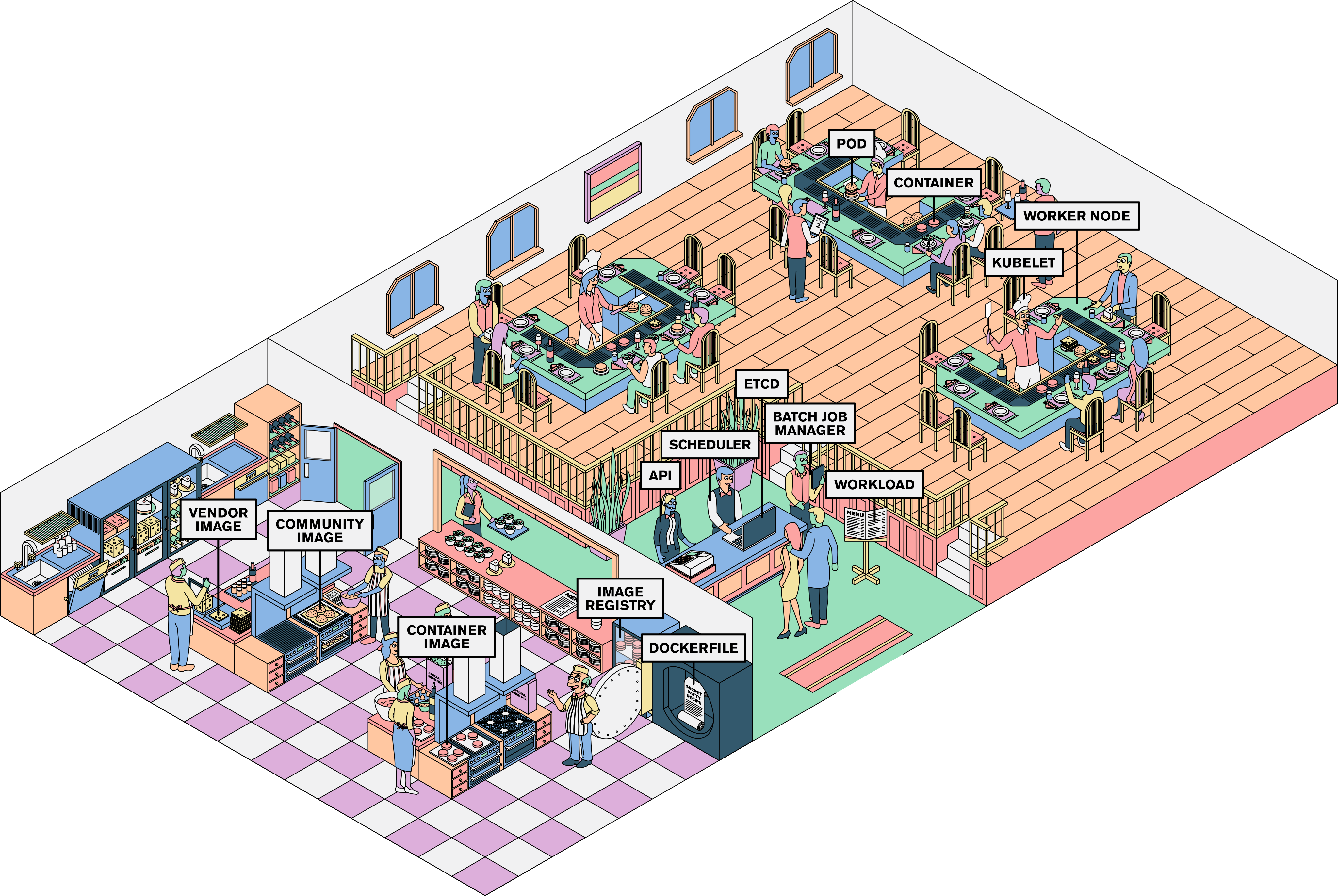
| Restaurant element | Kubernetes concept | Reference meaning |
|---|---|---|
| Food truck | Small custom application environment | Works at small scale because one person understands the whole setup, but becomes hard to duplicate safely. |
| Recipe | Dockerfile | Instructions for building a repeatable application package. |
| Prepared patty | Container image | The built package containing code, libraries, tools, and settings. |
| Cooked burger | Container | A running instance of the packaged application. |
| Burger pod | Pod | One or more containers that run together as the smallest deployable Kubernetes unit. |
| Menu item | Workload resource | A definition of what should run, how many replicas are needed, and which settings apply. |
| Front desk | Control plane | The coordinating system that accepts requests and works toward the desired state. |
| Receptionist | API server | The main interface for requests into the cluster. |
| Database | etcd | The store for cluster state and configuration. |
| Maitre d' | Scheduler | Chooses suitable worker nodes for new pods. |
| Waiter | Controller manager | Watches state and requests changes when actual state differs from desired state. |
| Dining table | Worker node | The machine where pods and containers run. |
| Table chef | Kubelet | Runs containers on a worker node and reports pod and node status. |
Developers build images from Dockerfiles and group running containers into pods.
Workload resources declare the desired pods, replicas, and settings.
The API server, etcd, scheduler, and controllers coordinate desired state.
Worker nodes and kubelets run pods, monitor health, and report status.
Containers make application runtime behaviour repeatable by packaging code with the dependencies and settings it needs.
Workload resources describe the application work Kubernetes should maintain, such as deployments, jobs, and replica counts.
The control plane stores desired state, accepts changes, schedules pods, and runs controllers that reconcile the cluster.
Worker nodes provide the compute capacity where pods run and where kubelets manage container lifecycle.

We are LiveWyer. We have spent over a decade helping organisations move applications onto Kubernetes and run them in production. We do this work alongside your own engineers, so your team owns the result rather than depending on us afterwards.
Independent and vendor-neutral: we have no platform or hypervisor to sell you
Time-boxed engagements with a clear scope and a clear deliverable
We document every decision and the trade-offs behind it
Book a technical review Explore Cloud Platform EngineeringNot sure where to start? A Technical Review is a short, time-boxed assessment of where you are today and what adopting Kubernetes would actually take. See how we have done this for other organisations.