Why this matters for decision-makers
Many organisations find that an application which worked well early on becomes harder to change and more expensive to run as demand grows. By the time the pressure to scale arrives, the room to do so has often gone. Understanding the concepts in this course helps managers and stakeholders make better-informed infrastructure decisions, and ask the right questions of their teams, before that point is reached.
This is the work we do at LiveWyer. If you would rather talk it through than read it through, a Technical Review is a short, time-boxed way to understand where you stand today.
Throughout this course we follow Tommy, a food truck owner who needs a better way to serve more customers without losing the consistency that made his food popular.
Current state
The food truck is like a small application where one person understands every task: taking orders, preparing food, managing ingredients, and fixing problems.
Target state
The restaurant is like a scalable platform: work is described clearly, roles are defined, and shared systems coordinate many moving parts.
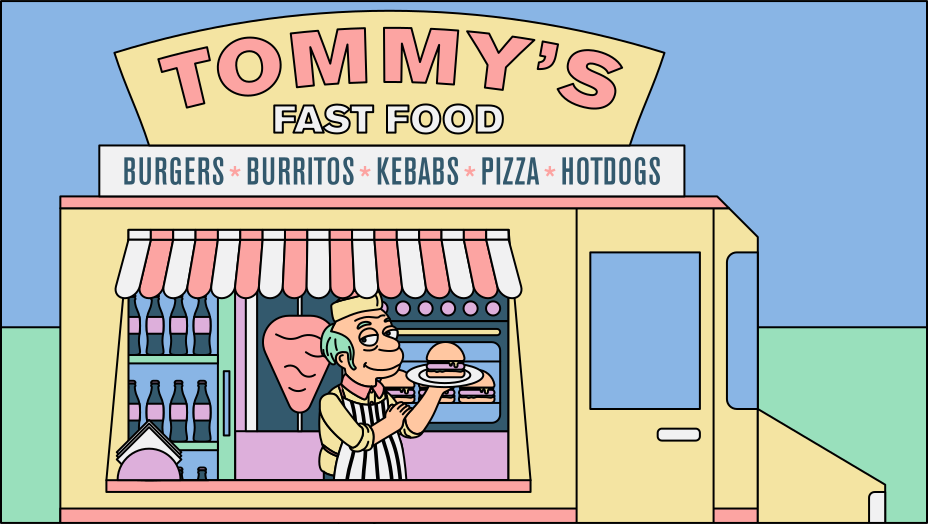
Tommy sells food from his food truck. It works because the setup is small, familiar, and tuned around how he personally cooks.
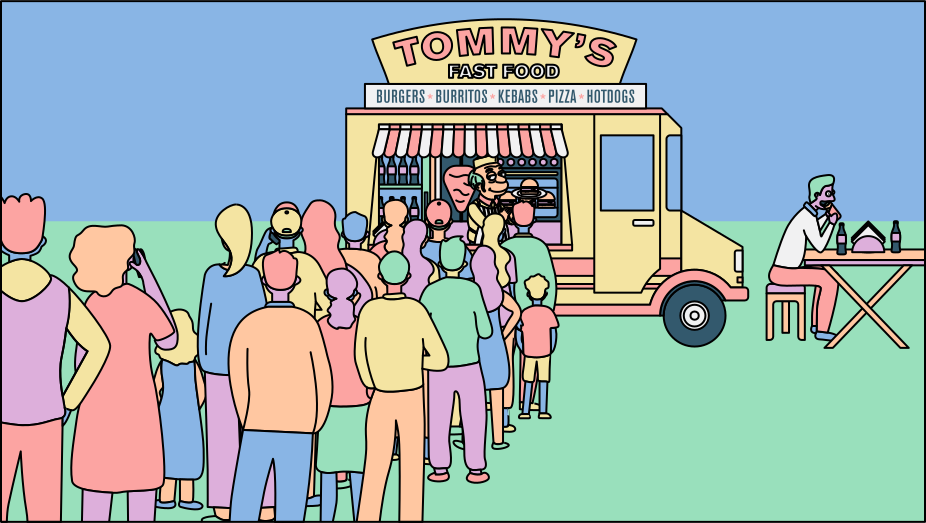
His food becomes very popular, but the truck has fixed capacity. More demand turns into queues, waiting, and customers leaving before they order.
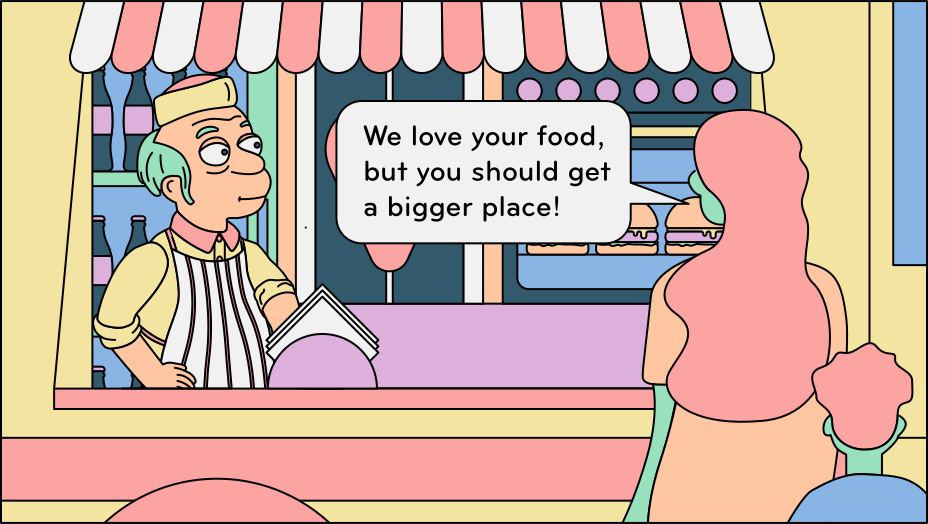
Customers ask Tommy to open a restaurant and cater larger events. The demand is there, but the current operating model cannot absorb it.

He only wants to expand if the quality stays consistent. Scaling badly would damage the thing customers already trust.
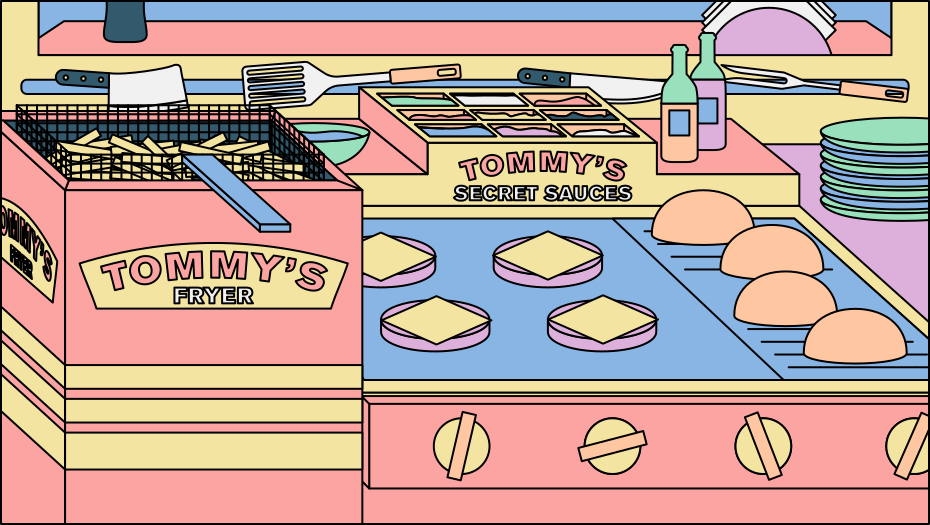
Tommy designed the food truck himself. It is a custom environment, optimised for his workflow rather than for a larger team.
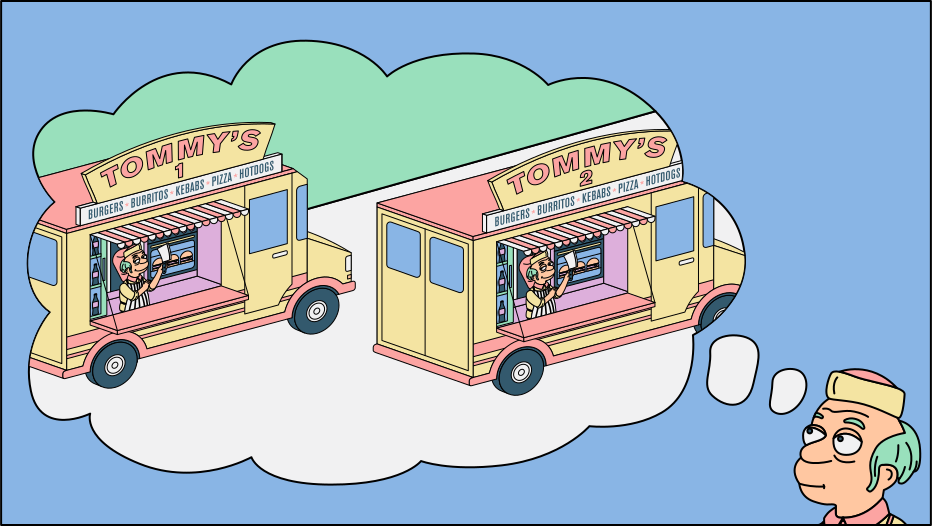
Opening another truck looks simple, but each extra truck would duplicate the same manual setup, training, and maintenance problems.
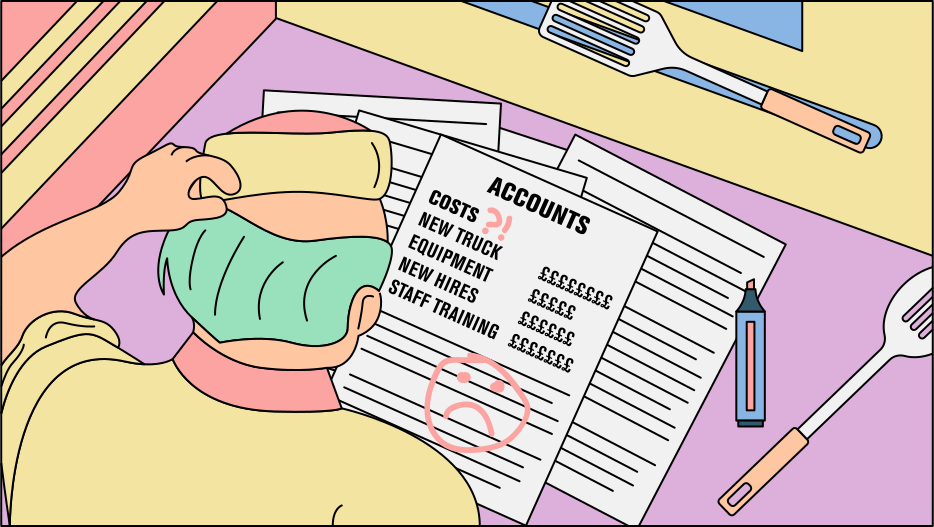
Every new truck would need staff who understand Tommy's standards without relying on Tommy being present for every decision.
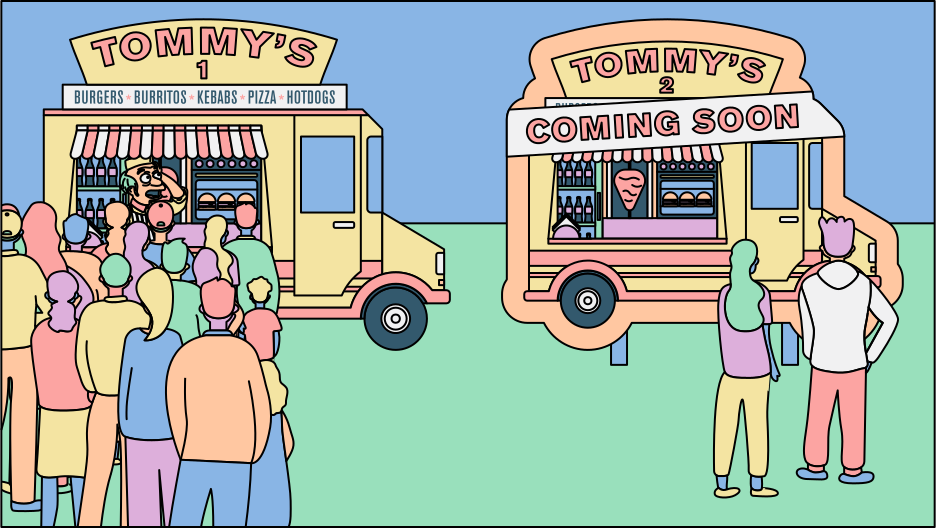
Building one truck at a time also cannot react quickly to short-term demand, such as events, seasonal spikes, or sudden popularity.
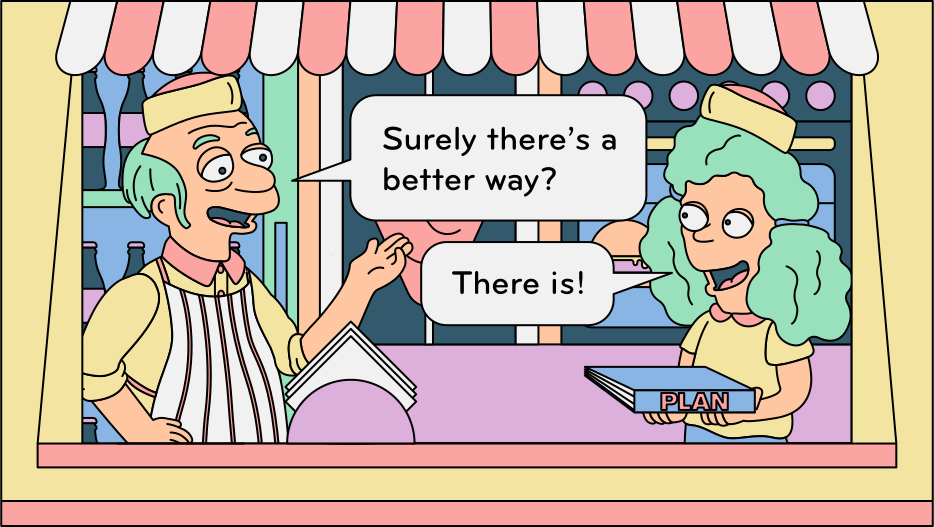
Tommy's daughter, Poppy, suggests designing a restaurant operation where the important work is documented, repeatable, and easier to coordinate.
Organisations face the same pattern when an application that worked in one familiar environment needs to support more users, more features, or more teams. Manually recreating custom environments can solve the next urgent problem, but it usually adds cost and inconsistency instead of creating a reliable way to scale.
Kubernetes helps once the application has been packaged and described clearly enough for a platform to run it consistently.
Next Section
Let’s map Tommy's restaurant plan to the Kubernetes concepts we will use throughout the course.